Hancock (2026) — Applied Coastal Granular Mechanics: The Open-System Compaction Protocol
APPLIED COASTAL GRANULAR MECHANICS
The Open-System Compaction Protocol for Real-Beach Sand Construction
Sandcastle Lessons SPI • Applied Coastal Science • STEM Education
South Padre Island, Texas, USA
Field observations: USA (South Padre Island and Port Aransas, Texas; Fort Myers Beach and Destin, Florida; Doran Beach, California; Cannon Beach, Oregon), United Kingdom (Formby, England; Barmouth, Wales)
2026
Abstract
Laboratory research on wet granular materials has established that sandcastle stability arises from capillary cohesion between grains and that maximum structural height can be predicted using elastic buckling theory under controlled conditions. These studies, while mathematically rigorous within their stated parameters, are laboratory-based: glass beads in rotating drums, and moulded columns of beach sand mixed with deionized water no taller than 60 cm. Predictions for full-scale sandcastles are extrapolations from these columns. No peer-reviewed study has tested sandcastle construction methods or predictions by building on a beach.
This paper presents a qualitative applied field methodology developed through more than two decades (since 2002) of professional sandcastle construction and instruction on South Padre Island, Texas, and applied at seven further beaches in the USA and the United Kingdom. The system integrates soil mechanics, granular physics, tidal capillary dynamics, vibration-induced consolidation, controlled de-gassing, continuous wet fill inside the form, conical geometry, grain state transition management, and sequential load redistribution.
Central to this framework is the distinction between closed-system laboratory models and open draining beach systems. Laboratory models identify a single optimum moisture content (approximately 1% liquid volume fraction; Pakpour et al., 2012). In an open, draining beach system, the optimum is not a starting mixture but an end state reached by drainage from slurry. In an open draining system, gravity-driven pore water dissipation creates a consolidation mechanism that is observed in field practice to produce dense, load-bearing blocks — consistent with Terzaghi’s effective stress principle but not previously applied in this context in the sandcastle literature.
Grain size characterisation data from the Harte Research Institute for Gulf of Mexico Studies (Texas A&M University-Corpus Christi) gives a mean grain size of 229.5 μm (fine sand) in the swash zone at Access Road BA9, South Padre Island — the zone from which the construction sand is taken — measured by laser particle-size analysis (unpublished data supplied to the author). The paper additionally documents the granular states observed inside the form during construction (the forming sequence: Slurry → Pendular → Funicular → Capillary); the role of conical, stepped-form geometry (stacked wrap forms) in building tall structures; seawater as the working fluid; results from eight beaches in the USA and United Kingdom; and field assessment methods for sand quality evaluation.
The findings demonstrate that successful structural sand construction on a real beach depends not on selecting a single equilibrium moisture fraction, but on managing transitions between granular states in a dynamic, draining system coupled to geology, tidal position, evaporation, and vibration. Laboratory models remain essential for understanding fundamental mechanisms but are insufficient predictors of real-world performance without incorporating dynamic boundary conditions.
Keywords: wet granular materials • capillary cohesion • draining granular systems • open-system compaction • soil mechanics • coastal beach geology • tidal capillary dynamics • vibration-assisted consolidation • granular state transitions • elastic buckling • STEM education • applied coastal engineering
1. Introduction
Sandcastle building has long served as a popular illustration of wet granular physics. Scientific literature has primarily focused on static laboratory systems of partially saturated granular columns, typically modelled as uniform cylinders under self-weight loading. These studies successfully explain why wet sand stands while dry sand collapses, and provide mathematically tractable models for capillary cohesion and elastic buckling failure.
However, real sandcastles are not built in laboratories. They are constructed on open beaches — dynamic environments characterised by continuous drainage, tidal fluctuation, evaporation, wind loading, vibration, and heterogeneous sand composition. Applying laboratory equilibrium models directly to beach construction introduces errors arising from fundamentally mismatched boundary conditions: specifically, the absence of drainage in every published experimental model.
This paper reconciles established granular mechanics with applied field observations from real beach environments across four countries, providing a practical engineering framework grounded in applied science rather than idealised models. It identifies the specific mechanisms by which open-system drainage produces structural outcomes that closed-system models cannot predict, characterises the South Padre Island site as a high-quality natural laboratory with independently verified material properties, and proposes formal research directions to bridge the remaining gap between field observation and peer-reviewed experimental science.
Field context: The author has conducted professional sandcastle construction and instruction on beaches in the United States and the United Kingdom since 2002. The primary site — Access Road BA9, South Padre Island, Texas — has been characterised by grain size analysis conducted by the Harte Research Institute for Gulf of Mexico Studies, Texas A&M University-Corpus Christi (Palmer, 2025).
2. Review of Laboratory Wet Granular Models
Published peer-reviewed research on sandcastle physics has established the following foundational results:
2.1 Capillary Cohesion and Repose Angle
Hornbaker et al. (1997) demonstrated that small quantities of liquid added to a granular medium dramatically increase the angle of repose by forming capillary bridges between grain surfaces. The liquid does not act as a glue; it creates menisci whose surface tension generates a compressive inter-grain force proportional to the surface tension of the liquid and inversely proportional to the grain radius.
Nowak, Samadani & Kudrolli (2005) extended this work to characterise the maximum stability angle of wet granular piles under real conditions, confirming that the relationship between liquid content and repose angle is non-monotonic: too little water produces weak, isolated bridges; too much water fills void space and acts as a lubricant, collapsing the grain contact network.
2.2 Elastic Buckling and Maximum Height
Pakpour et al. (2012) provided the most quantitatively developed model of sandcastle stability, predicting maximum column height through elastic buckling theory:
hₘₐₓ ∝ ( G · R² / ρg )¹ᐟ³
Where G is the shear modulus of the wet granular medium (a function of grain size, surface tension, and grain elastic properties), R is the column base radius, ρ is bulk density, and g is gravitational acceleration. The shear modulus was determined at an optimal liquid volume fraction of approximately 1%. Pakpour et al. used beach sand (average grain radius approximately 100 μm) mixed with deionized water and moulded into cylindrical columns up to 60 cm tall. (The widely repeated “8:1” sand-to-water rule is a different and much wetter figure — roughly 11–12% water — traced to a commercially commissioned 2004 beach-sand survey (Bennett, 2017) for which no method or data were published, and to press reports of glass-bead drum experiments (Nowak et al., 2005); it has no published experimental basis.) In their model, beyond the optimum, excess water occupies pore space without contributing to cohesion, reducing G and therefore hₘₐₓ.
This equation has direct practical implications: maximum height scales with the 2/3 power of base radius. A wider base produces a disproportionately taller maximum stable structure — a finding this paper extends to stepped and conical geometry in Section 9.1.
2.3 Morphology of the Liquid Phase
Scheel et al. (2008) used X-ray microtomography at the European Synchrotron Radiation Facility to directly image the liquid morphology within wet granular piles. Their observations are consistent with the liquid regimes described in the wider literature (Mitarai & Nori, 2006), in order of increasing saturation: the pendular regime (isolated bridges), the funicular regime (connected liquid networks spanning multiple grains), the capillary regime (liquid filling most void space with thin air pockets), and full saturation. Mechanical properties were found to be largely independent of liquid content across the funicular and capillary regimes — a finding with significant implications for the drainage phase transition described in Section 6 of this paper.
2.4 Shared Limitations of Laboratory Models
The peer-reviewed experimental studies in the sandcastle physics literature share some or all of the following boundary conditions, none of which apply to a real beach:
- Laboratory containers or moulds: no draining beach substrate below the structure
- Glass beads (Hornbaker et al., 1997; Nowak et al., 2005) or a single prepared sand (Pakpour et al., 2012): natural variation in grain shape and size absent
- Deionized water rather than seawater: no salt, no field moisture variation
- Constant liquid volume fraction: no time-dependent drainage or evaporation
- No environmental flux: no wind, solar heating, tidal variation, or vibration
- Small scale: maximum column heights no taller than 60 cm; no field-scale validation
RESEARCH GAP — No peer-reviewed study has tested sandcastle construction methods or predictions by building on a beach, with natural sand, seawater, a draining substrate, tide, wind and sun. The experimental literature is derived from laboratory models; full-scale heights (for example, 2.5 m for a 20 cm base radius) are extrapolations. This is the foundational gap this paper addresses.
3. The Real Beach as a Dynamic Draining Granular System
A beach is not a static system. It is a draining wet granular system coupled to tidal, atmospheric, and geological variables that change continuously throughout a construction event. The following variables, absent from every laboratory model, are operationally significant:
Variable |
Laboratory Model |
Real Beach |
|---|---|---|
Drainage |
None (laboratory container or mould) |
Continuous gravity-driven |
Water content |
Fixed at pour |
Time-dependent (drains, evaporates) |
Working fluid |
Deionized water |
Seawater |
Grain morphology |
Glass beads or a single prepared sand |
Angular, weathered, variable |
Grain size distribution |
Uniform single size |
Natural; well-sorted fine sand at BA9 (0% silt) |
Tidal capillary gradient |
Absent |
Active; direction depends on tidal state |
Evaporation |
Absent |
Active; wind and solar dependent |
Vibration |
Absent |
Human-induced and tool-induced |
Geometry |
Cylindrical only |
Conical and compound |
Scale |
Columns up to 60 cm |
2.0–2.1 m structures (South Padre Island) |
The direct consequence is that volumetric water content W(t) is not fixed but is a time-dependent function throughout construction. This alone invalidates static equilibrium assumptions during the build process. The optimal construction strategy is therefore not to target a fixed moisture fraction but to manage the material through its successive granular states as drainage proceeds.
4. Site Characterisation: Access Road BA9, South Padre Island
The primary field site for this protocol is Access Road BA9, South Padre Island, Texas — a fixed geospatial marker enabling consistent sediment comparison over time. Grain size analysis conducted by the Harte Research Institute for Gulf of Mexico Studies (Texas A&M University–Corpus Christi) provides the following characterisation of the swash-zone sand — the material used for construction (laser particle-size analysis, Beckman Coulter LS 13 320 XR; method as described in Palmer et al., 2025; unpublished data supplied to the author):
Parameter |
Value (Harte Research Institute, 2025) |
|---|---|
Mean Grain Size |
229.5 μm (Fine Sand, Wentworth classification) |
Median (D50) |
218.5 μm |
Fine Sand fraction |
63.2% |
Medium Sand fraction |
34.4% |
Sorting classification |
Well-sorted |
Silt content (active swash zone) |
0.0% |
The fine and medium fractions total 97.6%; the remaining 2.4% is not reported in the summary above.
4.1 Engineering Significance of the Grain Size Data
Fine sand at 229.5 μm provides a substantially higher surface-area-to-volume ratio than coarser beach sands. This increases the density of capillary bridge contact points per unit volume, directly amplifying cohesive strength per the Hornbaker et al. (1997) model. Well-sorted grains produce consistent, predictable mechanical responses to vibration-assisted consolidation, making material behaviour at this site reproducible across construction events.
4.2 Angular Grain Morphology
In the author’s field observation, the beach sand at South Padre Island consists of angular, weathered grains whose irregular surfaces create mechanical interlocking under compaction. Several peer-reviewed sandcastle studies use glass beads, and none reports grain shape for natural beach sand. Angular grains increase the effective internal friction angle of the compacted material beyond spherical model predictions. When vibration-assisted consolidation is applied, angular grains are forced into complementary surface fits, producing a high-friction matrix capable of supporting structures of 2.0–2.1 m.
4.3 Material Profile Distinction: Swash Zone vs. Backshore
Two material profiles are distinguished at South Padre Island:
- Swash zone aggregate (Access Road BA9): mean grain size 229.5 μm, 0.0% silt. The construction material: taken damp at or seaward of the previous high-tide line, where it is reworked by every tide and has not been driven on or wind-sorted. Characterised by Harte Research Institute data.
- Backshore and dune face material: sourced landward of the active swash zone. Contains measurable silt and clay fractions absent from the swash zone sample. Not used in the documented builds; its possible role as a binder is a question for future research (Section 17).
In principle, silt and clay particles fill the microscopic void spaces between larger grains (consistent with USCS gap-graded soil classification principles), increasing total inter-grain contact area, internal friction, and cohesion. Fines also retain moisture longer than pure quartz sand, slowing desiccation in high-wind coastal environments and prolonging capillary bridge integrity.
RESEARCH GAP — The mechanical contribution of backshore silt-clay fines to composite compressive strength has not been quantified. Laboratory modelling of mixed swash zone aggregate and backshore fines would move the literature beyond clean-quartz models.
5. Geology as the Primary Structural Constraint
The most important variable in sandcastle construction is not moisture content, vibration technique, or construction method. It is the geology of the beach. Grain size and morphology determine whether large-scale structural construction is physically possible at a given site — and where grain quality is too low, no amount of technical skill, correct moisture management, or vibration protocol will produce a structure of meaningful height. This is a field observation that the published laboratory literature does not address, and it directly challenges an implicit assumption in theoretical granular models.
5.1 The Theoretical Assumption Being Challenged
Existing wet granular physics models treat grain size as a parameter that affects the magnitude of capillary cohesion, but not its fundamental character. The Pakpour et al. (2012) elastic buckling model incorporates grain size through the shear modulus G — larger grains reduce G and therefore reduce predicted maximum height, but the model implies that for any grain size, capillary bridges will form and provide cohesion proportional to the surface-area-to-volume ratio of the grains. The theoretical prediction is that coarser sand produces shorter structures, but still buildable ones.
Field observation suggests otherwise. The same vertical forming protocol that routinely produces 2.0–2.1 m structures at South Padre Island and Port Aransas (Texas SandFest, 2024), and approximately 1.8 m at Victoria Road, Formby (England) and Barmouth (Wales), achieved limited results at Fort Myers Beach and in the Destin area on Florida’s Gulf Coast, where heights were well below those at the Texas sites.
The author proposes that this reflects a practical grain-quality threshold: as sand becomes coarser and rounder, the capillary bridge network can no longer provide sufficient strength to support structural self-weight at meaningful scale. Existing models predict a steady reduction in height with grain size; whether a practical threshold exists is a field hypothesis to be tested (Section 17).
5.2 The Physical Mechanism: Three Compounding Factors
The grain-size-dependent structural limit arises from the interaction of three physical mechanisms that compound one another as grain size increases:
- Contact point density: larger grains produce fewer grain-to-grain contact points per unit volume. Since each capillary bridge forms at a contact point, total cohesive force scales with contact point density. A cubic centimetre of 229.5 μm fine sand contains orders of magnitude more contact points than the same volume of coarse Florida beach sand. Below a critical contact point density, the aggregate cohesive force of the bridge network cannot carry the gravitational self-weight of the structure above a modest height threshold.
- Bridge geometry and Laplace pressure: the capillary pressure generated by a liquid bridge scales inversely with the meniscus radius of curvature (the Young-Laplace equation: ΔP = γ(1/r₁ + 1/r₂), where γ is surface tension and r₁, r₂ are principal radii of curvature). In coarser sand there are far fewer grain contacts per unit area, so although the force of an individual bridge grows with grain size, the total capillary cohesion (force per unit area, scaling approximately with γ/R) falls as grain size increases.
- Self-weight scaling: structural mass scales with volume (R³) while total capillary cohesive force scales with contact point density, which decreases with grain size. As grain size increases, a crossover point is reached at which the gravitational load on the structure grows faster than the cohesive capacity of the bridge network. Above this grain size, the structure fails by self-weight at heights well below what would be predicted by models calibrated on fine sand.
These three mechanisms operate simultaneously and compound each other. A beach with coarse, rounded grains fails on all three counts simultaneously: low contact point density, low cohesion per unit area, and insufficient aggregate cohesion to carry self-weight at height. No construction protocol compensates for this because the deficit is in the material, not the method.
5.3 Field Evidence: Same Method, Different Sand
The same vertical forming protocol that routinely produces 2.0–2.1 m structures at South Padre Island (Access Road BA9) and Port Aransas (Texas SandFest), and approximately 1.8 m at Victoria Road beach, Formby (UK) and Barmouth (Wales), achieved limited results on Florida Gulf Coast beaches at Fort Myers Beach and the Destin area. Heights there were well below those at the Texas sites. This is consistent with lesson operators in the Destin area, whose standard lesson structure is approximately 1.1 m (3.5 ft). The author attributes the difference to grain size and shape. Characterising the sand at Fort Myers Beach and Destin, and recording maximum heights achieved with the same protocol, is proposed as a priority study (Section 17).
Field observation: South Padre Island sand (229.5 μm mean, well-sorted fine sand) consistently achieves 2.0–2.1 m under the open-system protocol. At Fort Myers Beach and in the Destin area, the same protocol produced limited results. The difference is attributed to the material, not the method.
RESEARCH GAP — No published study has systematically measured maximum achievable structural height as a function of independently characterised grain size and morphology across multiple field sites. Characterising the sand at Fort Myers Beach and Destin, and recording maximum heights achieved with the same protocol, would constitute the first field-measured grain-size-to-maximum-height boundary condition in the sandcastle physics literature — and would test whether existing theoretical models need modification.
5.4 Grain Morphology: Angularity as an Independent Variable
Grain size alone does not fully explain the structural potential of a beach. Grain shape — specifically the degree of angularity versus sphericity — is an independent variable with direct mechanical consequences. Angular grains interlock under compaction, creating a friction-based mechanical matrix that supplements capillary cohesion. Rounded grains do not interlock; they slide past one another when stressed, relying entirely on capillary bridge tension for cohesion.
In the author’s field observation, the Florida sands built on appeared rounder than the angular, weathered South Padre Island sand; grain shape has not yet been measured at either site. The structural performance difference between the two sites is therefore the product of both grain size and grain morphology acting together. A beach with fine but rounded grains would perform better than coarse rounded grains but worse than fine angular grains. No existing published model incorporates both variables simultaneously under field conditions.
5.5 Practical Implication: Site Assessment Before Construction
The geological primacy of this constraint has a direct practical consequence for any construction protocol: site selection and material assessment must precede any other decision. The Sand Shaper / Willysphere field test described in Section 11 is designed to assess this — in the author’s experience, a site that cannot produce a stable 90-degree angle at 30 cm in a two-minute test does not support large-scale construction. The test provides a rapid geological pre-qualification that saves wasted effort on geologically unsuitable material.
This is the most practically important finding of more than two decades (since 2002) of multi-site field experience. Because the published experiments used single laboratory sands or glass beads, this constraint has not been described in the literature.
6. The Open-System Compaction Protocol: Core Mechanics
6.1 The Closed-System Limitation and Open-System Advantage
The single optimum moisture content identified in the laboratory (approximately 1% liquid volume fraction; Pakpour et al., 2012) is a valid finding within its experimental parameters: a fixed mixture of prepared sand and deionized water, moulded into a column. Laboratory flume experiments on dune sand show the same overall pattern — strength rises with water content up to a point, then falls as the sand saturates (Conti et al., 2024) — and field measurements on real dunes confirm that capillary water gives sand faces cohesion (van Wiechen et al., 2024). The limitation is that fixed-mixture parameters do not describe a beach, where the water content is never fixed and the beach itself drains the structure.
In an open draining system, excess water has a pathway out of the structure. Rather than acting as a lubricant that destroys cohesion (as it would in a closed container), high initial water content serves as a transport medium enabling grains to move into their tightest possible packing arrangement under vibration. Compaction on the beach comes from three actions working together: vibration, which packs the grains tightly and drives out air; gravity, which settles them; and drainage — as free water runs out into the beach, water bridges form at every grain contact, and their cohesion pulls the grains together and locks the dense packing in place. In soil-mechanics terms this cohesion is capillary suction (a negative pore-water pressure), which increases effective stress — consistent with Terzaghi’s effective stress principle (Terzaghi, Peck & Mesri, 1996) and governed by the fluid dynamics of porous media (Bear, 1972).
The result is a compacted monolith which, in field practice, is markedly stronger than the same sand poured or hand-packed, because the drainage process itself drives additional compaction beyond what a static mixture produces. This strength difference has not yet been measured (Section 17).
6.2 Water as a Transport Mechanism, Not a Liability
This reframing of high water content is the central operational distinction of the open-system protocol. Laboratory models treat water above the optimum as structurally damaging. In field application, the oversaturated slurry state is the starting condition, not a failure condition. Its function is lubrication for grain rearrangement and transport toward maximum packing density. The beach substrate removes it once that function is complete.
“There is no such thing as too much water in a sandcastle” applies to forming, where the form contains the slurry and the beach drains it. Hand stacking and drip castles also use wet, sloppy sand, but unconfined, shaped only by the hands.
6.3 Pore Water Pressure Gradient and the Consolidation Piston
As drainage proceeds, the descending water front creates a pore water pressure gradient — higher pressure above the front, lower pressure below. This gradient acts as a hydraulic consolidation piston: the downward seepage, and the capillary cohesion that develops behind the draining front, press the grains together and hold them in the dense packing achieved by vibration. The mechanics are directly analogous to primary consolidation in geotechnical engineering, with the beach substrate functioning as a freely draining lower boundary condition rather than an impermeable base.
6.4 Evaporative Surface Tension
As the outer surface of the compacted structure dries under solar radiation and wind, capillary bridge contraction in the surface layer creates a tightened external skin. This surface tension effect increases resistance to wind-driven surface erosion and contributes to the structural coherence of detailed carved elements. Laboratory models conducted at constant humidity do not capture this mechanism. With seawater, evaporation also carries salt to the drying surface (Section 6.5). Continued drying, however, ends in the Dry state — no moisture, no cohesion, no sandcastle — which is why carving proceeds promptly and the base is kept damp.
6.5 Seawater as the Working Fluid
Laboratory studies use deionized water at fixed fractions; beach construction uses seawater in quantities that are never measured, and drainage — not the builder — sets the final moisture state. Whatever is poured in, the beach drains each block to a similar strong end state. This is why the protocol has no water-to-sand ratio. The slurry in the documented build (Section 12) was weighed in the field at approximately 16 lb per US gallon (≈1.9 kg/L), consistent with saturated quartz sand at a porosity of about 0.40–0.45; because the slurry state cannot be defined precisely in the field, this value is approximate.
Seawater differs from fresh water in three ways relevant to construction: (1) slightly lower vapour pressure (about 2%), giving evaporation rates roughly 2–5% below fresh water and marginally longer working time; (2) slightly higher surface tension (about 1.5%); and (3) dissolved salt, which evaporation carries to the drying surface. Salt crystallising at grain contacts is known to form cement-like bonds in well-sorted fine sand (Nickling & Ecclestone, 1981) and to produce crusts that resist wind erosion and reduce further evaporation.
The author hypothesises that, on hot, windy days, capillary bridges in the outer skin of a sandcastle are progressively replaced by salt bridges, contributing to the observed hardening and wind resistance of carved surfaces. A paired seawater/fresh-water build test is proposed (Section 17).
7. Granular State Transitions During Construction
7.1 The Granular States: Four Regimes Plus Dry
Professional construction in this protocol manages sand through the granular states identified in the wet granular physics literature (Mitarai & Nori, 2006): Dry, Pendular, Funicular, Capillary and Slurry (Figure 1). Dry sand has no moisture, no bridges and no cohesion — no sandcastle. On the beach the states appear in two sequences.
(a) The forming sequence (observed inside the form, on the beach):
1. Damp sand in. Sand is taken at, or seaward of, the previous night’s high-tide line and shovelled into the empty form to about one-third full, with a hole made in the centre. This sand is already damp, is reworked by every tide, and has not been driven on or wind-sorted; dry sand from higher up the beach is rarely used.
2. Water in, vibrate — Slurry. Water is poured into the hole and the form is vibrated until liquid sand flows out from under the bottom edge of the form. This is the field indicator that the mix is complete: water has displaced the air and the grains are fully mobilised. No ratio is measured. The slurry is always mixed inside the form; it is never pre-mixed and poured.
3. More water, then more sand — Slurry and Pendular. Once the bottom third has settled and compacted, more water is added, then more sand into the water, vibrating at intervals until the form is full. Freshly added sand above the water line shows isolated bridges (Pendular) until it is worked into the slurry. The fill is never allowed to dry and then be re-wetted, which would create layers of different consistency.
4. Form nearly full — Funicular. A connected water network, with a water film standing on top.
5. Surface water drains away; the top turns matte — Capillary. The strongest state. In a timed field video it occurred approximately 20–25 seconds after the last vibration.
(b) After the forms are removed (drying over time): Capillary → Funicular → Pendular → Dry. Strength falls as the block dries, which is why carving proceeds promptly and the base is kept damp.
The critical insight is that the optimal construction state (Capillary) cannot be poured — it must be arrived at through managed drainage from the Slurry state. A builder who targets a fixed moisture fraction from the outset bypasses the compaction benefit of the drainage transition and produces a weaker structure than one formed from the Slurry state and allowed to drain under controlled conditions.
7.2 Field Visualisation: The Sand Science State Table
Figure 1 below presents the five granular states mapped to both their physical descriptions (consistent with Mitarai & Nori, 2006 and Scheel et al., 2008) and their specific roles in the open-system construction protocol. This table was developed from field practice and subsequently cross-referenced against the published granular physics literature.
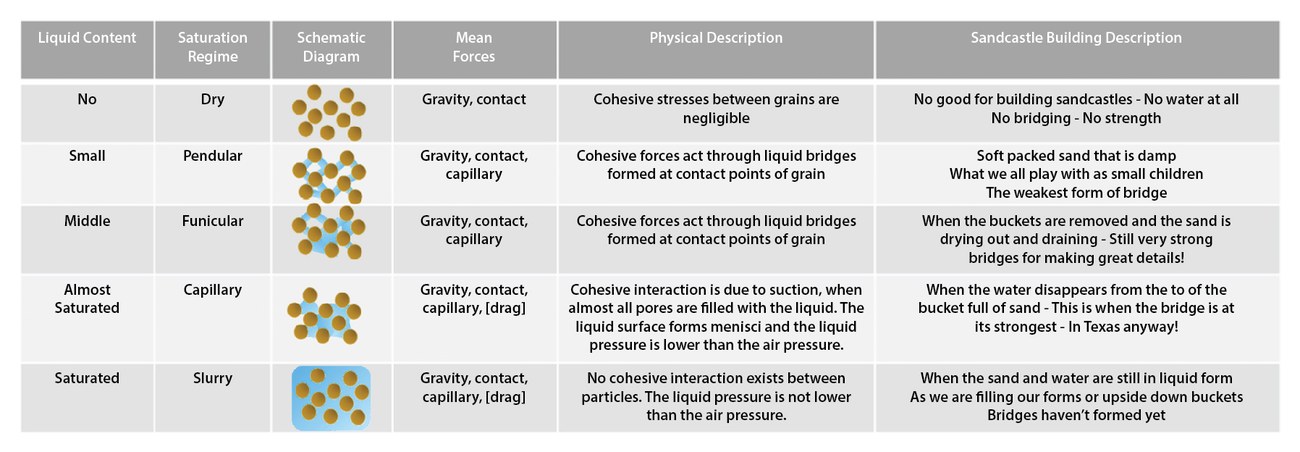
Figure 1. Granular saturation regimes and their roles in the open-system compaction protocol (Hancock, 2026, adapted from Mitarai & Nori, 2006)
An important distinction from the laboratory perspective must be noted regarding the Slurry row. In laboratory models, the Slurry state represents structural failure — excess water that destroys cohesion. In the open-system protocol described in this paper, the Slurry state is the deliberate starting condition. Water is not a liability at this stage; it is a transport and lubrication medium. The transition from Slurry to Capillary — driven by gravity drainage and managed vibration — is the compaction mechanism that produces structural strength greater than a static mixture achieves. The table’s Sandcastle Building Description column reflects this open-system perspective throughout.
The Capillary row note — “In Texas anyway!” — is not colloquial imprecision. It is the most scientifically significant qualifier in the table. It encodes the geology-as-primary-constraint finding described in Section 5: that the Capillary state produces maximum bridge strength on South Padre Island’s 229.5 μm fine angular sand, but that on coarser or less well-sorted beaches, the same state does not produce comparable strength. This qualifier is the field observation that current theoretical models do not predict or explain.
RESEARCH GAP — The relationship between the granular states and the time-dependent drainage curve for 229.5 μm angular sand in an open draining system has not been instrumented. Tensiometric measurement of the moisture content at each regime boundary during a monitored open-system build event would provide the first field-calibrated saturation regime timeline for real beach construction.
8. Vibration-Assisted Consolidation
Mitarai & Nori (2006) identify a foundational principle of granular physics: sand grains are macroscopic particles that do not relocate via thermal energy alone. External forces — gravity, vibration, or applied pressure — must be applied to drive grains into a stable, compacted configuration.
8.1 De-gassing
Applied vibration during the Slurry state forces entrapped air bubbles to the surface of the saturated mixture. In a closed container without vibration, air can remain trapped, creating internal void defects and structural weak points. In an open draining system, both air and excess water are simultaneously expelled by vibration and gravity, producing a denser, more homogeneous grain matrix.
8.2 Maximum Packing Fraction
Vibration reduces inter-grain friction transiently, enabling grains to translate and rotate into their tightest achievable packing arrangement. The oversaturated slurry provides the lubrication medium during this process. As drainage removes the water, the grains are locked into the dense configuration established by vibration — a packing fraction that cannot be achieved by static pouring or hand compaction alone.
8.3 Thixotropy and State Reversibility
The material behaves thixotropically in practice — fluid under vibration, solid at rest. In clean swash-zone sand with no fines, this is driven by vibration re-fluidising the grains and drainage restoring cohesion, which is why the process can be reversed or reset at any stage before the Capillary state is reached. This has both practical implications (a compromised fill can be re-saturated and reconsolidated) and educational applications described in Section 14.
RESEARCH GAP — The optimal vibration frequency and duration for de-gassing 229.5 μm fine angular sand in an open draining system have not been measured. Instrumented vibration trials would establish the first quantitative vibration protocol for field-scale granular construction.
9. Foundation Geometry: The Volcano Base Method
Structural stability begins at the foundation. The Volcano Base Method establishes a widened, sloped base geometry that addresses three simultaneous engineering requirements:
- Foundation bearing capacity: the widened base distributes the structural load over a larger substrate area, reducing bearing pressure per unit area and resisting settlement.
- Drainage pathway: the sloped base geometry creates consistent radial drainage pathways, ensuring that pore water dissipation is uniform around the foundation perimeter rather than concentrated at a single drainage point.
- Shear stress reduction: the widened base reduces the average shear stress at the critical failure plane at the base of the structure, increasing resistance to rotational shear failure.
9.1 The Buckling Equation and its Limits of Applicability
The Pakpour et al. (2012) elastic buckling equation predicts maximum stable height as a function of base radius:
hₘₐₓ ∝ ( G · R² / ρg )¹ᐟ³
It is important to state precisely what this equation describes and what it does not. It models a homogeneous cylinder of wet granular material at a fixed optimal moisture fraction (approximately 1% by volume), where structural integrity arises from capillary cohesion. The shear modulus G was measured for a single sand in the laboratory; it has never been measured for natural beach material.
The equation is general, but its material values are local. Field practice shows that G — and therefore achievable height — is governed by beach geology and by how the sand is placed and drained. On South Padre Island (fine, well-sorted sand; open-system drainage consolidation), conical, wide-based structures of 2.0–2.1 m are built routinely (Figures 4 and 5). At sites with coarser or less well-sorted sand, the same protocol produced lower structures (Section 5.3). Measuring field G or unconfined compressive strength at each site is the step that turns the laboratory relation into a field prediction.
A buckling height is a theoretical ceiling for one failure mode only — a slender column bending over under its own weight. Real structures fail first in other ways: the base crushing or shearing under load, the surface drying before the top is reached, wind, vibration, and the practical limits of filling and compacting forms at height. For the base width of the structure in Figure 4, the relation would allow a height of roughly 4–5 m — a height no one would attempt on a beach with that base. The world’s tallest sandcastle (21.16 m, Blokhus, Denmark, 2021) used 4,860 tonnes of sand on a base 32 m wide, built with a wooden scaffold (Randall, 2021). Real achievable height is set by material, method and engineering, not by the buckling relation alone. Tapered and stepped columns resist self-weight buckling better than cylinders (Cox & McCarthy, 1998), which is why professional and competition builds use stacked forms of decreasing diameter (Section 10.3).
The geometric benefits of the Volcano Base — lower centre of gravity, wider bearing area, radial drainage uniformity — are real and operationally significant. But their primary function in the open-system protocol is drainage management and load distribution, not extension of the capillary buckling limit.
RESEARCH GAP — The compressive strength mechanism of a drainage-consolidated granular monolith has not been characterised. Unconfined compressive strength testing of drainage-consolidated specimens at field-representative scale, compared against specimens mixed to a fixed moisture content and hand-packed, would establish the strength differential quantitatively and determine whether a modified buckling model or an alternative failure mode characterisation is appropriate for consolidated field structures.
9.2 Build Location and Tidal Position
Construction site selection is based on tidal state. An incoming tide creates a rising capillary moisture gradient below the build site, providing a sustained moisture supply to the lower structure. An outgoing tide creates a descending gradient, accelerating drainage. Each condition produces different compaction timing and capillary retention behaviour. This tidal coupling is entirely absent from laboratory models and has no equivalent in the published sandcastle physics literature.
10. Subtractive Monolith Architecture
10.1 The Additive Failure Mode
Casual and hobbyist construction relies on additive hand-piling: successive handfuls or small bucket-loads of sand placed layer by layer. Each interface between layers constitutes a shear plane — a discontinuity in the inter-grain contact network where compaction and grain interlocking are reduced relative to the material within each layer. Under the weight of a tall structure, these interfaces become preferential failure surfaces for rotational shear failure, consistent with slope stability failure mechanics in geotechnical engineering (Mitchell & Soga, 2005).
10.2 The Monolith Approach
This protocol forms the entire structural volume as a single pre-compacted monolith using vibration-assisted consolidation in a form or series of stacked forms. Because the monolith is formed as a continuous unit through a single drainage event, the internal arching network — the transfer of compressive stress through a continuous inter-grain contact chain — operates without shear plane discontinuities throughout the structure volume.
10.3 Sequential Form Removal and Load Redistribution
Where multiple stacked forms are used, forms are removed one at a time from the top down. Each removal progressively reduces the total load on lower layers while allowing stress to redistribute through the newly exposed surface before the next form is removed. This staged unloading is analogous to staged excavation sequences in civil engineering, where incremental load relief prevents sudden stress redistribution that could exceed the material’s shear strength.
In professional and competition practice, tall structures are formed with stacked “wrap forms” — open rings, each approximately 2 ft (0.6 m) high, of decreasing diameter — so that the structure is built as a stepped cone and compacted tier by tier (Figures 2 and 3). The stepped form reduces the weight carried near the top and widens the base, the same principle that makes tapered columns more resistant to self-weight buckling (Cox & McCarthy, 1998).
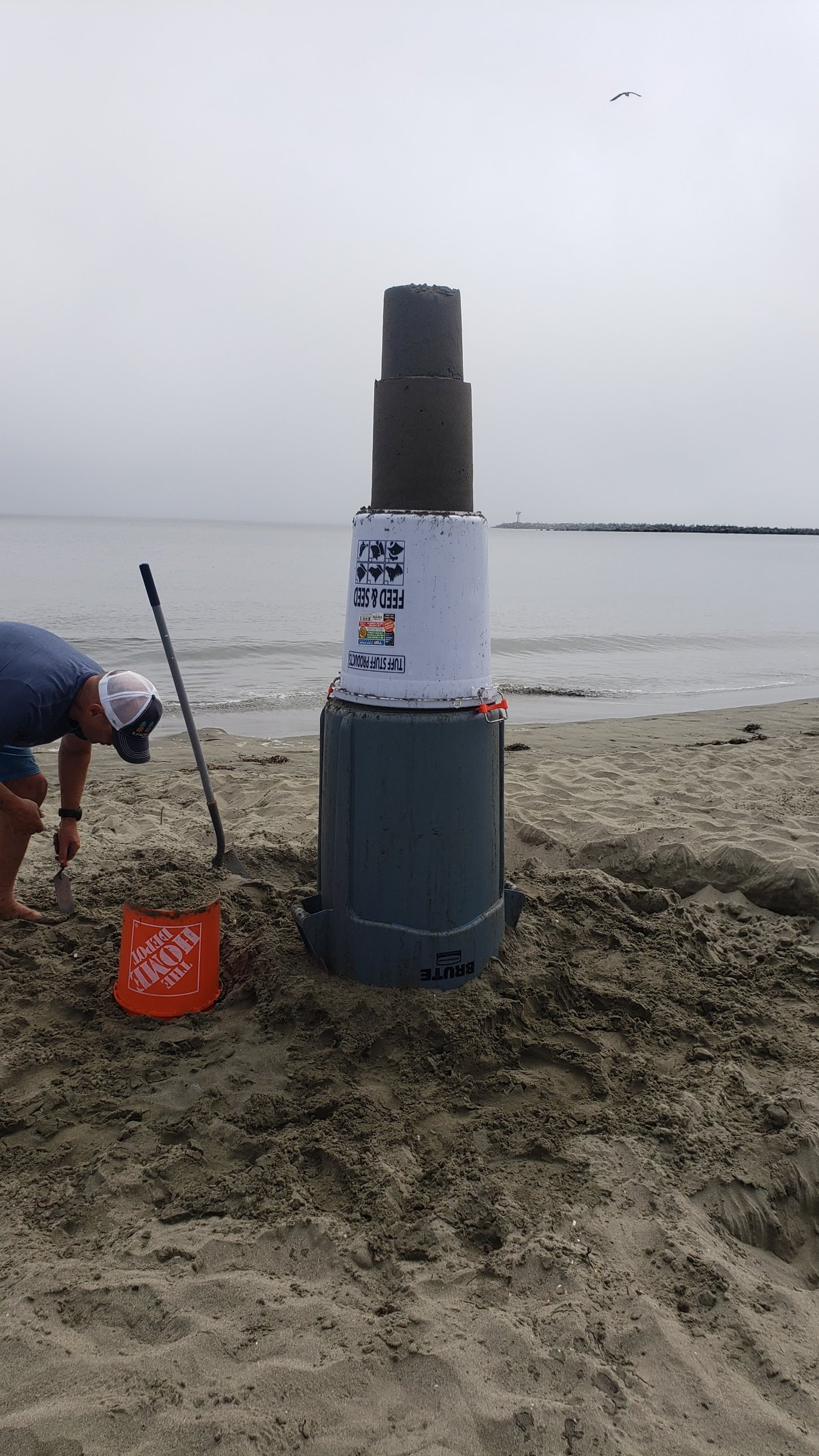
Figure 2. Stacked forms on the US Pacific coast (photo dated 18 September 2023): base form, intermediate form and upper sand tiers, filled and compacted from the bottom up.
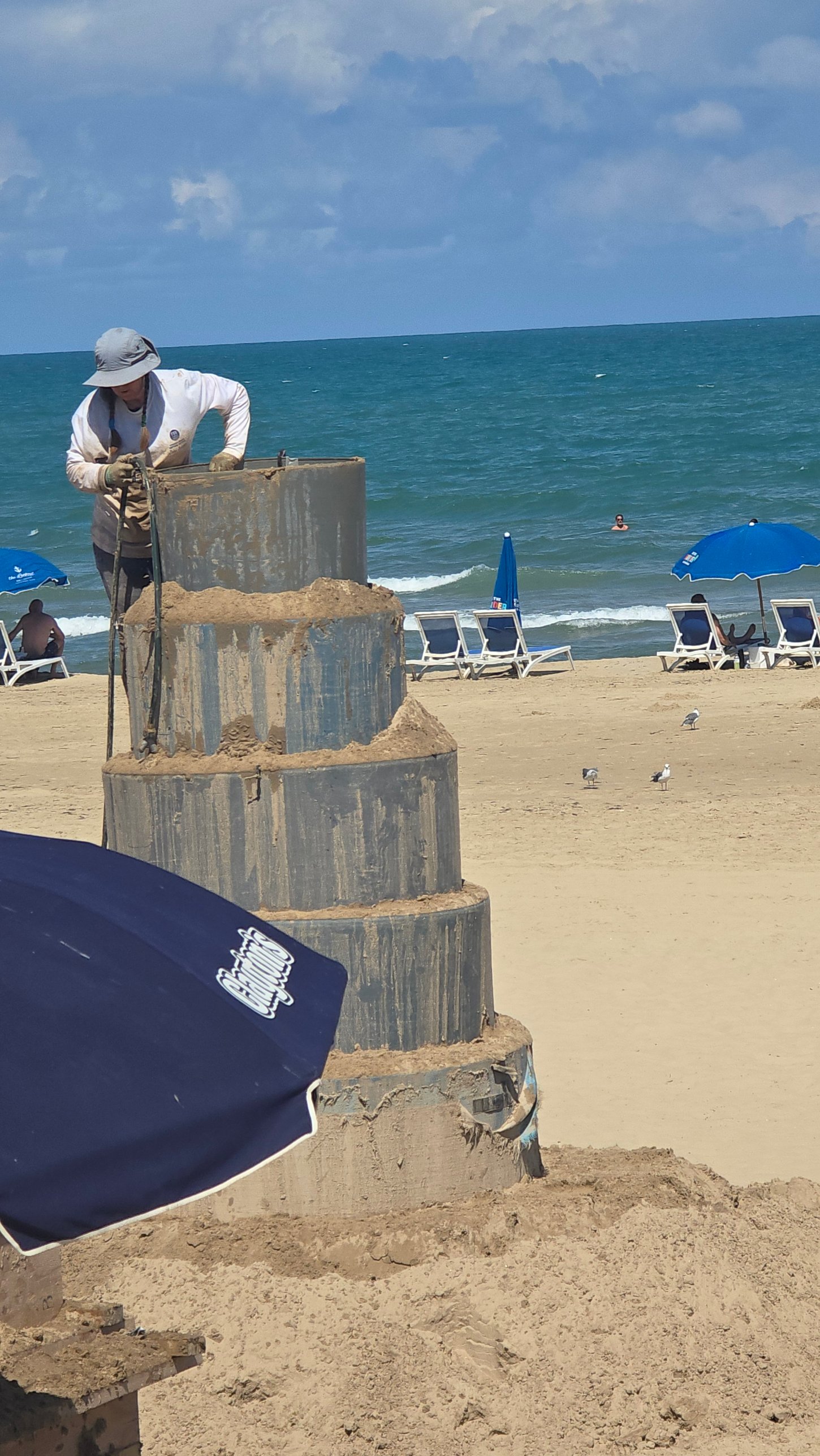
Figure 3. Wrap forms in use at South Padre Island (photo dated 28 September 2026): five stacked rings, filled and compacted tier by tier.
10.4 Top-Down Subtractive Carving
All detailed carving proceeds from the top of the structure downward. This ensures that the weight of already-carved upper sections is known and stable before carving operations that could affect the load-bearing geometry of lower sections begin. The structural core of the monolith retains its full compressive strength throughout the carving process; carved detail represents dead load removed from the system, not load added to it.
11. Field Assessment: The Sand Quality Test Protocol
Standard informal assessment methods — the hand squeeze test — provide insufficient information to predict structural potential before construction begins. This protocol employs a standardised rapid field assessment using a Sand Shaper or Willysphere tool to evaluate the following parameters in a two-minute test:
- Cohesion: does a formed test shape hold a 90-degree angle after form removal?
- Compaction response: does the material compact uniformly under applied pressure, or does it exhibit differential density?
- Drainage speed: time from the last vibration to the surface turning matte (Capillary state)
- Mix completion: during forming, vibration continues until liquid sand flows out from under the bottom edge of the form — a visible indicator that water has displaced the air and the mix is complete.
- Structural potential: maximum height achievable with a standard test form before failure
This test is applicable globally, provides actionable predictions superior to informal assessment, and generates a consistent record that can be correlated with grain size data where such data is available. It constitutes the most transferable element of the field methodology and the most amenable to standardisation for future comparative studies.
RESEARCH GAP — The Sand Shaper / Willysphere test has not been formally defined with quantified pass/fail criteria, test geometry specifications, or correlation data against measured compressive strength outcomes. Formalising this protocol as a standardised field test — analogous to the cone penetrometer or pocket vane shear test in geotechnical practice — would provide a directly reproducible assessment tool for field-scale granular construction.
12. Field Documentation: 2024 Build at Access Road BA9
The following documents a representative build event at the primary field site in 2024, providing an empirical record against which the open-system protocol can be evaluated (Figure 4).
Parameter |
Recorded Value |
|---|---|
Site |
Access Road BA9, South Padre Island, Texas |
Sand material |
Swash-zone sand only, taken at or seaward of the previous high-tide line; mean 229.5 μm (Harte Research Institute, 2025) |
Sand mass |
Approximately 1,375 kg (3,030 lb): 177 US gallons of slurry at ≈16 lb/gal (main tower 55 + 27 + 5 gal; second tower 44 + 17 + 2 gal; back tower 27 gal), plus ≈200 lb volcano base |
Initial moisture |
Oversaturated slurry mixed inside the forms (no ratio measured) |
Slurry density |
≈16 lb/US gal (≈1.9 kg/L), field-measured, approximate |
T+10 min |
Vibration-assisted consolidation applied; de-gassing and grain settlement observed |
T+30 min |
Drainage transition complete; monolith capable of supporting builder’s full body weight |
Wind conditions |
Gusts exceeding 32 km/h (20 mph) during construction |
Final height |
Approximately 2.0–2.1 m (6 ft 6 in; about 7 ft including the base) |
Survival duration |
Several days post-construction |
Methodological note: This field record does not include a parallel control structure mixed to a fixed moisture content and hand-packed under identical conditions, third-party measurement of compressive strength, or instrumented pore pressure data. It constitutes systematic field observation, not controlled field experimentation. A formal comparative field study with instrumented controls would be required to meet the evidentiary standard for peer-reviewed publication.
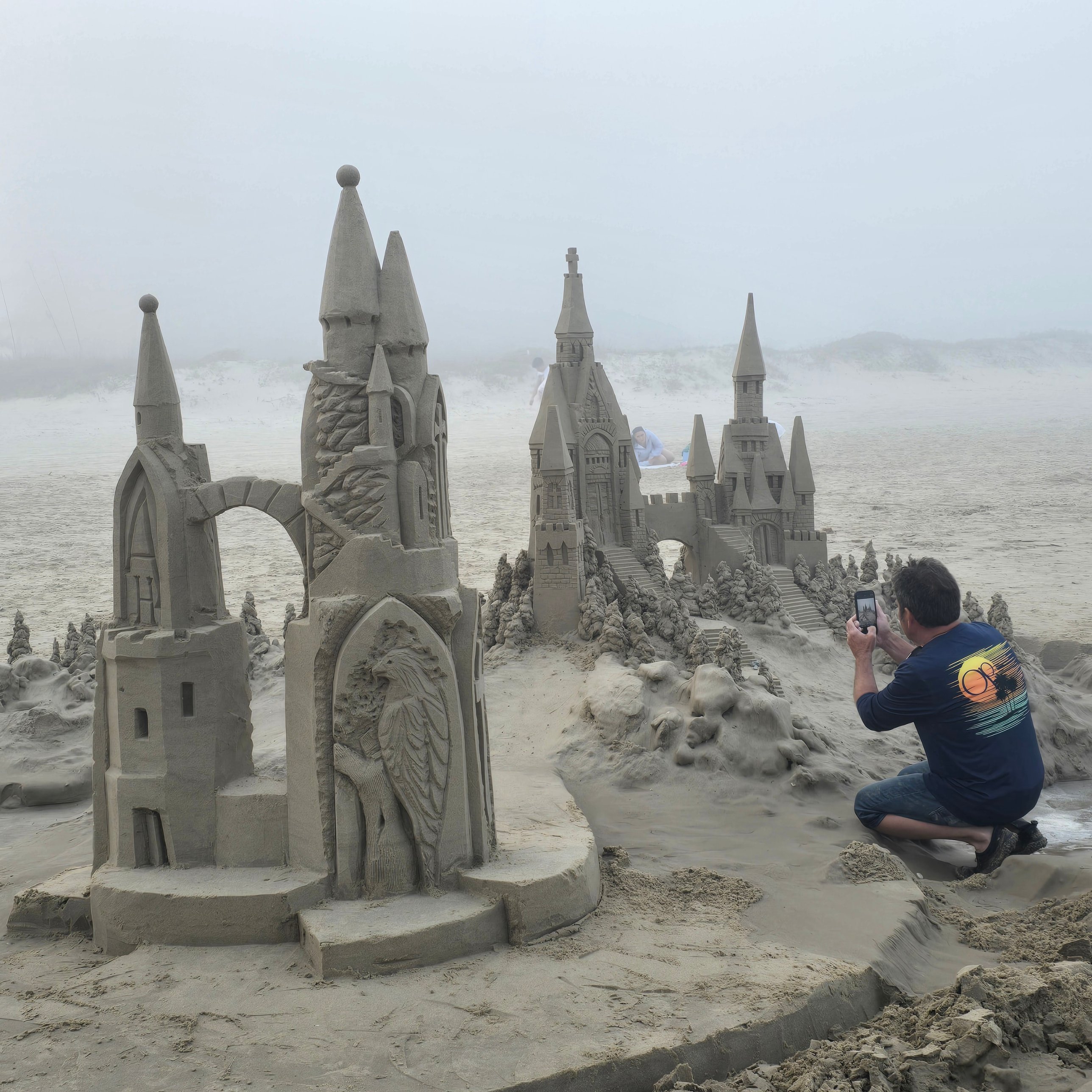
Figure 4. The documented 2024 build at Access Road BA9, South Padre Island: three towers formed in stacked forms from swash-zone sand, approximately 2.0–2.1 m.
13. Photographic Field Evidence: Cross-Environment Validation
The following photographs constitute direct visual evidence of open-system consolidation protocol outcomes at geographically and geologically distinct sites. Together they provide cross-environment field validation that the protocol is not specific to the South Padre Island material but is transferable to different coastal geological settings.
Field sites and results with the same protocol:
- Strongest — Access Road BA9, South Padre Island, Texas (2024): 2.0–2.1 m, approximately 1.4 tonnes; grain size measured. Texas SandFest, Port Aransas, Texas (2024): successful.
- Successful — Victoria Road, Formby, England (2022): approximately 1.8 m. Barmouth, Mid Wales, estuary sand (2022): approximately 1.8 m.
- Workable, but weaker than Texas sand — Doran Beach, Bodega Bay, California (2026); Cannon Beach, Oregon (2026): approximately 1.1–1.3 m.
- Limited — Fort Myers Beach and the Destin area, Florida: heights well below the Texas sites.
Across eight beaches in the USA and the United Kingdom, the same protocol produced the tallest and strongest structures on the fine, well-sorted Texas Gulf sands, good results on the UK and US Pacific coasts, and limited results on Florida’s Gulf Coast. The ranking follows the sand, not the method.
13.1 South Padre Island, Texas, USA (Access Road BA9) — Figure 5
Approximate structure height: 2.1 m (7 ft). Compound multi-tower form comprising a central spire, secondary flanking tower, arched gateway with portcullis relief, carved brick coursing, and a commemorative circular relief panel. Sand: swash-zone sand at 229.5 μm mean grain size (Harte Research Institute, 2025).

Structural observations directly relevant to this paper:
- The central spire is tall and slender relative to its local base, yet stands because it is carved from a drainage-consolidated monolith on a wide base block, not poured as a free-standing cylinder.
- The compound form — multiple towers of different heights emerging from a shared base block — is structurally impossible by any additive piling method. It requires the entire volume to have been consolidated as a single monolith before carving began.
- Fine surface detail (portcullis bars, brick coursing, relief numerals) confirms that the Capillary state was fully achieved and stable at time of carving. This level of carved detail requires compressive strength sufficient to hold 90-degree angles under tool loading.
- The dry, uniform surface colour across carved faces is consistent with evaporative skin tightening of the outer layer (and, with seawater, possible salt bonding; Section 6.5), providing additional surface erosion resistance.
- The base footprint visible in the surrounding sand is wide and irregular — consistent with the Volcano Base drainage geometry, not a simple cylinder pour.
13.2 Victoria Road, Formby, Merseyside, United Kingdom (11 September 2022) — Figure 6
Approximate structure height: 1.8 m (6 ft). Single-tower form with conical spire, carved window openings, decorative base relief, and circular drainage moat. Sand: Irish Sea coastal sediment, visibly darker and finer-appearing than SPI material (grain size not yet measured).
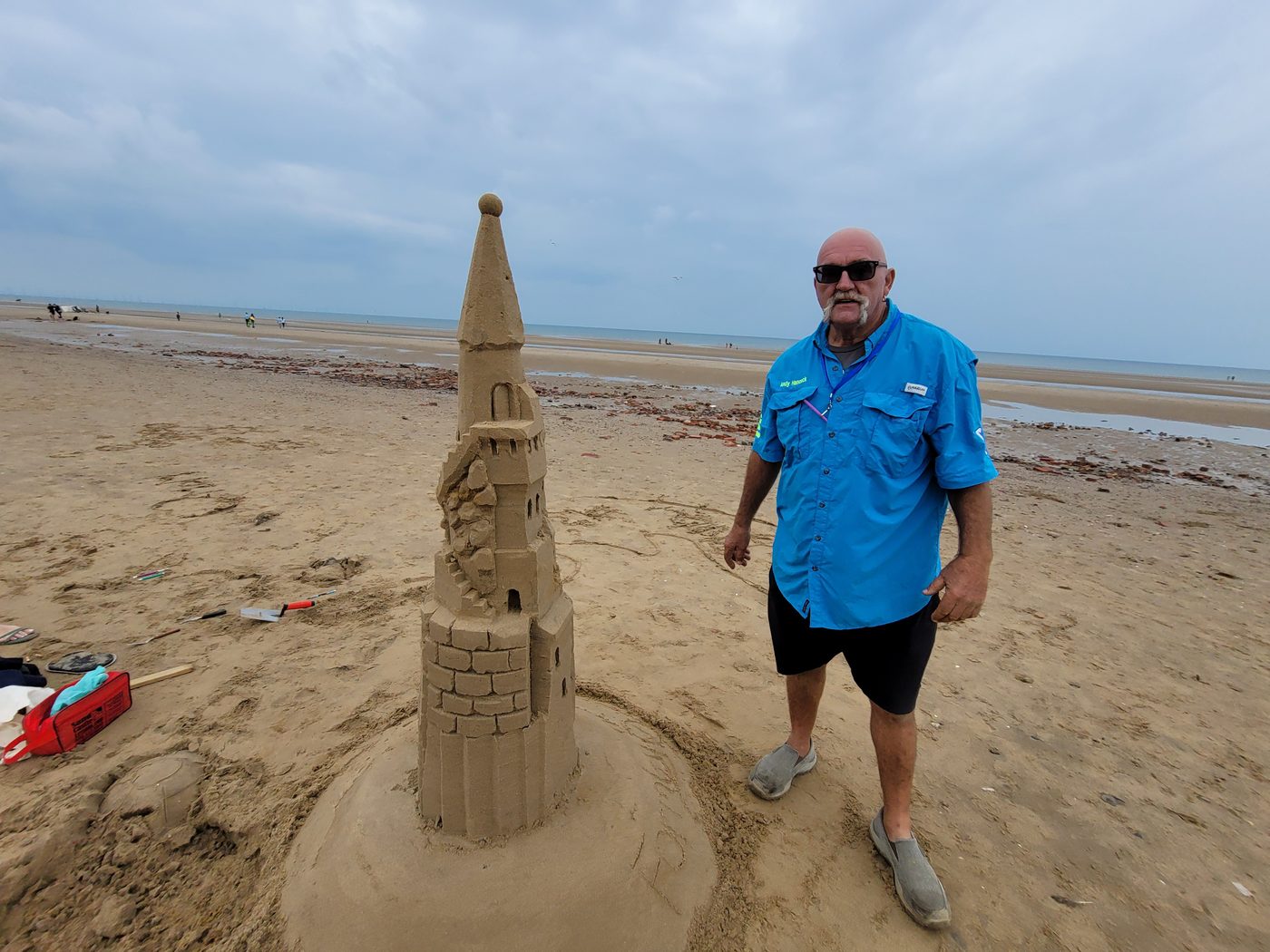
Structural observations directly relevant to this paper:
- A clearly visible circular drainage moat surrounds the base perimeter. This is the Volcano Base drainage pathway adapted to a wide, flat tidal beach with a different drainage gradient than SPI. The moat functions as an engineered drainage control feature, managing pore water dissipation in a beach environment with different substrate permeability characteristics.
- The spire stands on a wide volcano base, confirming that the open-system consolidation protocol transfers to a beach of different geology.
- The surface texture of the Formby structure is visibly coarser and less sharply carved than the SPI structure, consistent with a less well-sorted grain distribution. Window openings and carved relief are present but less fine in detail — a direct observable correlation between grain morphology and achievable carving resolution.
- The tidal flat visible in the background — extending far seaward under an overcast sky — confirms a low-gradient macro-tidal beach environment fundamentally different from the SPI shoreline. The protocol produced a structure of approximately 1.8 m, compared with 2.0–2.1 m at South Padre Island.
- Tools visible in the foreground (palette knives, loop tools, structural forms) constitute visual documentation of the field toolkit referenced throughout this paper.
13.3 Barmouth, Mid Wales, United Kingdom (2022) — Figure 7
Approximate structure height: 1.8 m. Estuary sand at the mouth of the Mawddach. Same forming protocol: volcano base, tall tapered tower and sand sphere (grain size not yet measured).
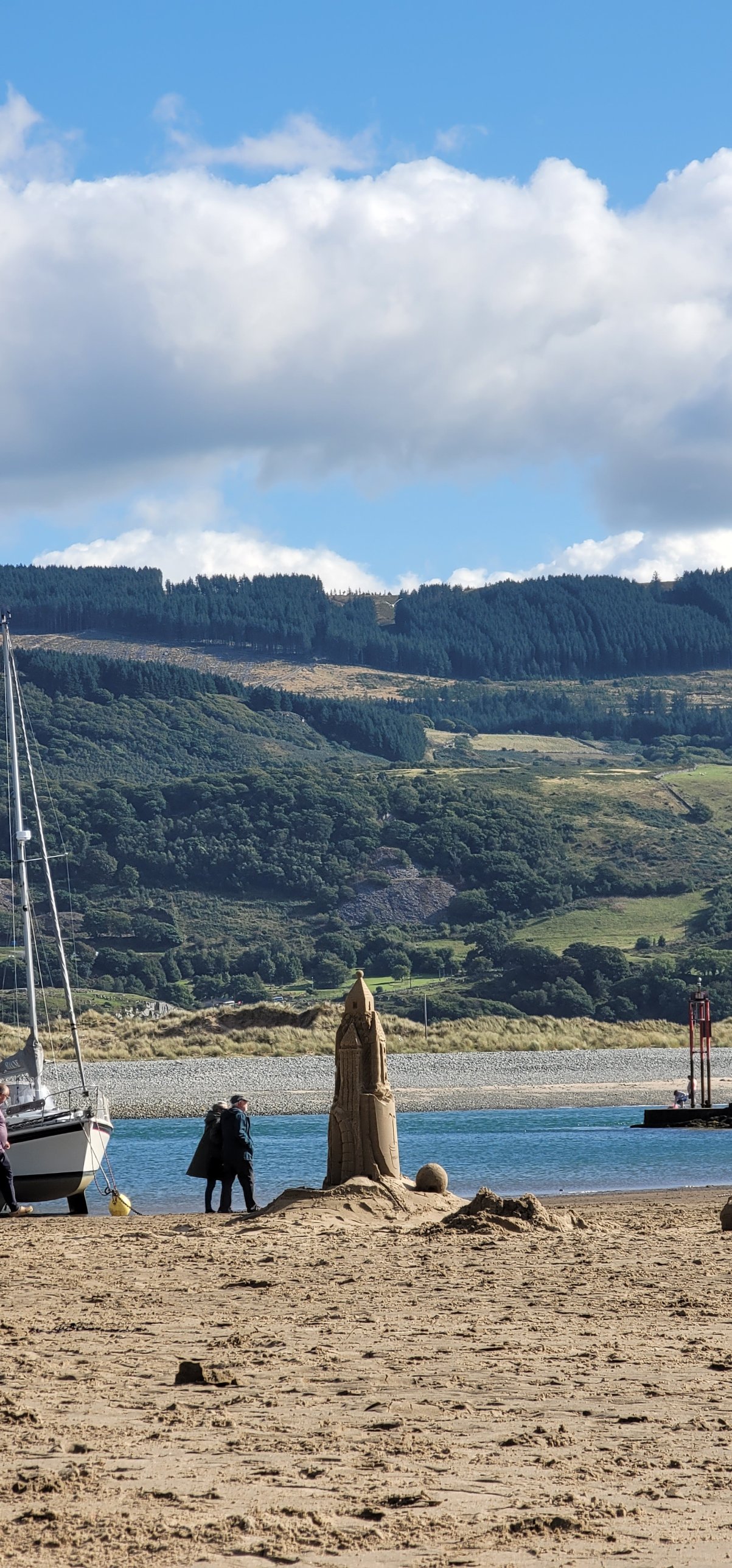
Figure 7. Barmouth, Mid Wales, 2022.
13.4 Cannon Beach, Oregon, USA (2026) — Figure 8
Same forming protocol on the US Pacific coast. Detailed multi-tower structure with an arch bridge, freestanding towers, fine brickwork and sand spheres, approximately 1.1–1.3 m: workable, but lower than at the Texas sites.

Figure 8. Cannon Beach, Oregon, 2026.
13.5 Cross-Environment Implications
These photographs, taken at sites up to approximately 9,000 km apart and characterised by markedly different geology, tidal regime, and atmospheric conditions, demonstrate two things the laboratory literature cannot address:
- The open-system consolidation protocol is not site-specific. It operates wherever a permeable beach substrate provides a draining lower boundary condition and the material can be brought to the oversaturated slurry state. The protocol adapts to local conditions (tidal state, drainage rate, grain morphology) but its core mechanical sequence — the forming sequence Slurry → Pendular → Funicular → Capillary, followed by drainage — is consistent across environments.
- Achievable structural height and carving resolution are functions of local grain morphology. The finer, better-sorted, more angular SPI sand produces both greater height and finer carved detail than the coarser Formby sand under the same protocol. This is a directly observable grain-size-to-structural-performance correlation across natural field materials — a relationship the laboratory literature has modelled only with standardised, non-representative materials.
RESEARCH GAP — No systematic cross-environment field study exists comparing structural performance (height, compressive strength, survival duration, carving resolution) as a function of independently characterised grain size distribution and morphology across multiple beach sites. The eight sites listed in this section would constitute the minimum multi-environment dataset for such a study.
14. Inclusive STEM Application: Tactile Granular Mechanics
The most distinctive educational application of this protocol is its accessibility to visually impaired participants. By removing visual observation entirely and relying on haptic feedback, participants develop a physically grounded understanding of structural engineering principles through direct sensory experience.
14.1 The Thixotropic Teaching Protocol
- Phase 1 — Fluid state (Slurry): participant places their arm into a container of oversaturated slurry. High water content and agitation place the material in a fluid state; the arm moves freely, demonstrating zero shear strength.
- Phase 2 — Solid state (Capillary): as water drains and agitation ceases, capillary tension forms between grains and the material locks around the participant’s arm. The transition from fluid to load-bearing solid is experienced as direct haptic feedback without visual cue.
- Phase 3 — Reversibility: re-addition of water and agitation returns the material to the fluid state, demonstrating that structural integrity is a reversible physical state transition, not chemical bonding.
14.2 Vibrational Literacy
Participants learn to detect the change in vibrational response of a container as de-gassing progresses. When entrapped air is expelled, the mass and damping characteristics of the contained granular medium change measurably, producing a detectable shift in the frequency and amplitude of transmitted vibration. This constitutes a sensory cue for the completion of de-gassing in the forming sequence that is independent of visual observation.
14.3 Geometric Comprehension Through Touch
Carved geometric forms in a hard-formed monolith communicate the concept of shear strength through direct tactile contact. A 90-degree carved angle that holds its form under finger pressure conveys the material’s compressive strength in a manner that is immediately physically meaningful to a participant without sight. This application has no equivalent in the published STEM education or granular physics literature.
15. Industrial Relevance: Granular Mechanics in Petroleum Engineering
The cohesive mechanics of damp granular materials are operationally significant in petroleum geomechanics, where the stability of unconsolidated sand formations around wellbores determines production viability. The residual capillary moisture between grains in a partially depleted reservoir provides the cohesive strength — sometimes described informally as a ‘sandcastle effect’ — that prevents wellbore collapse during production.
The variables managed in the open-system compaction protocol — pore water pressure gradient, grain angularity, vibration-induced consolidation, and desiccation rate — correspond directly to the variables petroleum engineers model in sand management for high-pressure unconsolidated reservoirs. Field-scale open-system granular construction offers a directly observable physical analogue for industrial sand management principles that is not available from laboratory models.
16. Synthesis: What Laboratory Models Explain and What They Do Not
Laboratory wet granular physics correctly explains:
- Why wet sand holds a steeper angle than dry sand (capillary bridge formation; Hornbaker et al., 1997)
- The liquid morphology regimes in a wet granular pile (Mitarai & Nori, 2006; Scheel et al., 2008)
- The elastic buckling failure mode and its dependence on base radius for capillary-cohesion-only structures (Pakpour et al., 2012)
- The necessity of external energy to achieve grain compaction (Mitarai & Nori, 2006)
Laboratory wet granular physics does not explain:
- How drainage generates compaction forces absent from closed laboratory systems
- How grain angularity affects interlocking strength beyond spherical model predictions
- How tidal position affects capillary gradient direction and drainage consistency
- Why buckling theory is not a practical predictor of achievable height on a beach (it addresses one failure mode, using laboratory material values)
- Whether a practical grain-quality threshold exists below which large-scale construction is not achieved — as suggested by limited results at Fort Myers Beach and Destin, Florida
- Why grain morphology (angular vs. rounded) produces structural performance differences independent of grain size
- How silt-clay fines contribute to cohesion and moisture retention in natural composite sand
- How sequential form removal manages stress redistribution at build scale
- How field-built consolidated structures reach 2.0–2.1 m (South Padre Island) and approximately 1.8 m (Formby, Barmouth) using natural beach sand and seawater
- Why the same protocol produces different structural heights on geologically distinct beaches — the ranking following the sand, not the method
The gap between these two lists is the research contribution of this paper.
17. Proposed Research Directions
The following research directions would provide the formal experimental bridge between the field observations documented in this paper and the peer-reviewed granular physics literature:
- Grain-size-to-maximum-height boundary condition study: systematic measurement of maximum achievable structural height as a function of independently characterised grain size and morphology across multiple field sites — including South Padre Island, Port Aransas, Formby, Barmouth, Doran Beach, Cannon Beach, Fort Myers Beach and Destin, using the same laser method as the Harte Research Institute — would produce the first field-measured grain-size structural limit dataset in the literature, and would test whether a practical construction ceiling exists.
- Unconfined compressive strength testing: laboratory measurement of compressive strength of drainage-consolidated sand specimens versus specimens mixed to a fixed moisture content and hand-packed, at field-representative scale, would quantify the strength differential and characterise the failure mode of consolidated monoliths.
- Instrumented pore pressure measurement during open-system drainage: tensiometers or electrical resistivity probes positioned at multiple depths within a monitored build event would provide the first field-measured pore pressure gradient data for the drainage phase transition, enabling direct comparison with Terzaghi consolidation theory.
- Quantification of vibration frequency and duration for optimal de-gassing: instrumented vibration trials using accelerometry on forms containing 229.5 μm angular sand at different initial saturation levels would establish the first quantitative vibration protocol for field-scale granular construction.
- Silt-clay composite modelling: laboratory modelling of mixtures of Access Road BA9 swash zone aggregate with measured backshore fine fractions would characterise whether backshore fines could act as a binder and move the literature beyond clean-quartz models.
- Formal comparative field study: a controlled build event comparing compressive strength, structural height, and failure resistance between the open-system compaction protocol and an additive, hand-piled reference structure at a fixed moisture content, at identical scale under measured environmental conditions, with third-party instrumented assessment.
- Standardisation of the field assessment test: formal specification of the Sand Shaper / Willysphere test geometry, procedure, and pass/fail criteria, with correlation data against measured compressive strength and structural survival time, to produce a transferable, reproducible field assessment tool.
- Multi-site comparative grain morphology analysis: grain size, sorting, and angularity characterisation from all field sites where this protocol has been applied, enabling systematic comparison of protocol performance as a function of grain characteristics and formal testing of the grain-size threshold hypothesis.
- Seawater versus fresh water: paired builds from the same sand, one with seawater and one with fresh water, comparing surface hardness (scratch test or pocket penetrometer) and wind-erosion time, to test the salt-bridge hypothesis (Section 6.5).
- Timed forming records: video with a ruler and clock in shot, logging time from the last vibration to a matte surface, water content (weigh–dry–weigh), base width and height, over repeated builds at each site.
References
[1] Bear, J. (1972). Dynamics of Fluids in Porous Media. Dover Publications, New York. Foundational text in porous media flow theory; provides the theoretical basis for gravity-driven pore water dissipation and hydraulic pressure gradients in permeable substrates.
[2] Bennett, M.R. (2017). “How to build the perfect sandcastle – according to science.” The Conversation. Popular account of a 2004 beach-sand survey commissioned by Teletext Holidays; reports a 1:8 water-to-sand ratio; no method or data published.
[3] Conti, S., Splinter, K.D., Booth, E., Djadjiguna, D. & Turner, I.L. (2024). “Observations on the role of internal sand moisture dynamics in wave-driven dune face erosion.” Geomorphology, Vol. 462. Laboratory flume study; sand strength increases with water content up to about 10–15%, then decreases towards saturation.
[4] Cox, S.J. & McCarthy, C.M. (1998). “The shape of the tallest column.” SIAM Journal on Mathematical Analysis, Vol. 29, pp. 547–554. Optimal tapering of columns against self-weight buckling.
[5] Halsey, T.C. & Levine, A.J. (1998). “How Sandcastles Fall.” Physical Review Letters, Vol. 80, No. 14, pp. 3141–3144. DOI: 10.1103/PhysRevLett.80.3141. Theoretical analysis of capillary force effects on sandpile stability; demonstrates that critical failure angle is unchanged in large systems but increased for finite-sized structures.
[6] Hornbaker, D.J., Albert, R., Albert, I., Barabási, A.-L. & Schiffer, P. (1997). “What keeps sandcastles standing?” Nature, Vol. 387, p. 765. DOI: 10.1038/42831. Foundational experimental paper on the effect of small liquid quantities on granular repose angle and capillary bridge formation. Conducted using glass spheres in laboratory conditions.
[7] Mitarai, N. & Nori, F. (2006). “Wet granular materials.” Advances in Physics, Vol. 55, No. 1–2, pp. 1–45. DOI: 10.1080/00018730600626065. Comprehensive review of inter-grain cohesion mechanics, granular state transitions (pendular, funicular, capillary regimes), and the necessity of external energy for granular compaction.
[8] Mitchell, J.K. & Soga, K. (2005). Fundamentals of Soil Behavior. 3rd edition. John Wiley & Sons, New Jersey. Standard graduate-level soil mechanics reference; relevant to grain morphology, internal friction angle, shear failure mechanics, and angular grain interlocking.
[9] Nickling, W.G. & Ecclestone, M. (1981). “The effects of soluble salts on the threshold shear velocity of fine sand.” Sedimentology, Vol. 28, No. 4, pp. 505–510. Wind-tunnel study; small amounts of NaCl and KCl form cement-like bonds in well-sorted fine sand.
[10] Nowak, S., Samadani, A. & Kudrolli, A. (2005). “Maximum angle of stability of a wet granular pile.” Nature Physics, Vol. 1, pp. 50–52. DOI: 10.1038/nphys106. Experimental characterisation of repose angle in wet granular piles under real conditions; confirms non-monotonic relationship between liquid content and stability angle.
[11] Pakpour, M., Habibi, M., Møller, P. & Bonn, D. (2012). “How to construct the perfect sandcastle.” Scientific Reports (Nature Publishing Group), Vol. 2, Article 549. DOI: 10.1038/srep00549. Quantitative analysis of wet sand column stability using elastic buckling theory; establishes hₘₐₓ ∝ (G·R²/ρg)¹ᐟ³ and an optimum of approximately 1% liquid volume fraction. Experiments used moulded columns of beach sand (average grain radius ≈100 μm) and deionized water, up to 60 cm tall; full-scale heights are extrapolated.
[12] Palmer, T. (2025). “Sediment Grain Size Analysis: Access Road BA9, South Padre Island.” Harte Research Institute for Gulf of Mexico Studies, Texas A&M University–Corpus Christi. Laser particle-size analysis (Beckman Coulter LS 13 320 XR; method as Palmer, Pollack, Tubbs & Withers, 2025, report to the Texas General Land Office, contract 24-022-015-E445). Swash zone, Access Road BA9. Unpublished data supplied to the author.
[13] Randall, I. (2021). “Top tips for super sandcastles: explore the weird world of sand.” Physics World. Includes the 21.16 m Blokhus record sandcastle (4,860 tonnes of sand, 32 m wide, wooden scaffold) and the Bennett and Pakpour figures.
[14] Scheel, M., Seemann, R., Brinkmann, M., Di Michiel, M., Sheppard, A., Breidenbach, B. & Herminghaus, S. (2008). “Morphological clues to wet granular pile stability.” Nature Materials, Vol. 7, pp. 189–193. DOI: 10.1038/nmat2117. X-ray microtomography study of liquid morphologies within wet granular piles at European Synchrotron Radiation Facility; identifies pendular, funicular, and capillary liquid regimes.
[15] Terzaghi, K., Peck, R.B. & Mesri, G. (1996). Soil Mechanics in Engineering Practice. 3rd edition. John Wiley & Sons, New York. Foundational geotechnical engineering reference; provides the effective stress principle and consolidation theory underpinning the open-system drainage compaction mechanism described in this paper.
[16] van Wiechen, P.P.J., Mieras, R., Tissier, M.F.S. & de Vries, S. (2024). “Coastal dune erosion and slumping processes in the swash-dune collision regime based on field measurements.” Journal of Geophysical Research: Earth Surface, Vol. 129, No. 10, e2024JF007711. DOI: 10.1029/2024JF007711. Field measurements on a real dune; capillary infiltration gives dune faces cohesion.
[17] Zhang, W. et al. (2020). “Study on the Best Shape and Stability of Sand Castle.” IOP Conference Series: Earth and Environmental Science, Vol. 514, Article 022071. DOI: 10.1088/1755-1315/514/2/022071. Modelling of sandcastle shape and stability under wave and rain loading.
— end of document —